Updated November 12, 2024 01:41PM
Ma'wa Collective is Getting Muslim Women Outside Together
The group has run more than 20 trips in under two years, and shows no sign of slowing down.
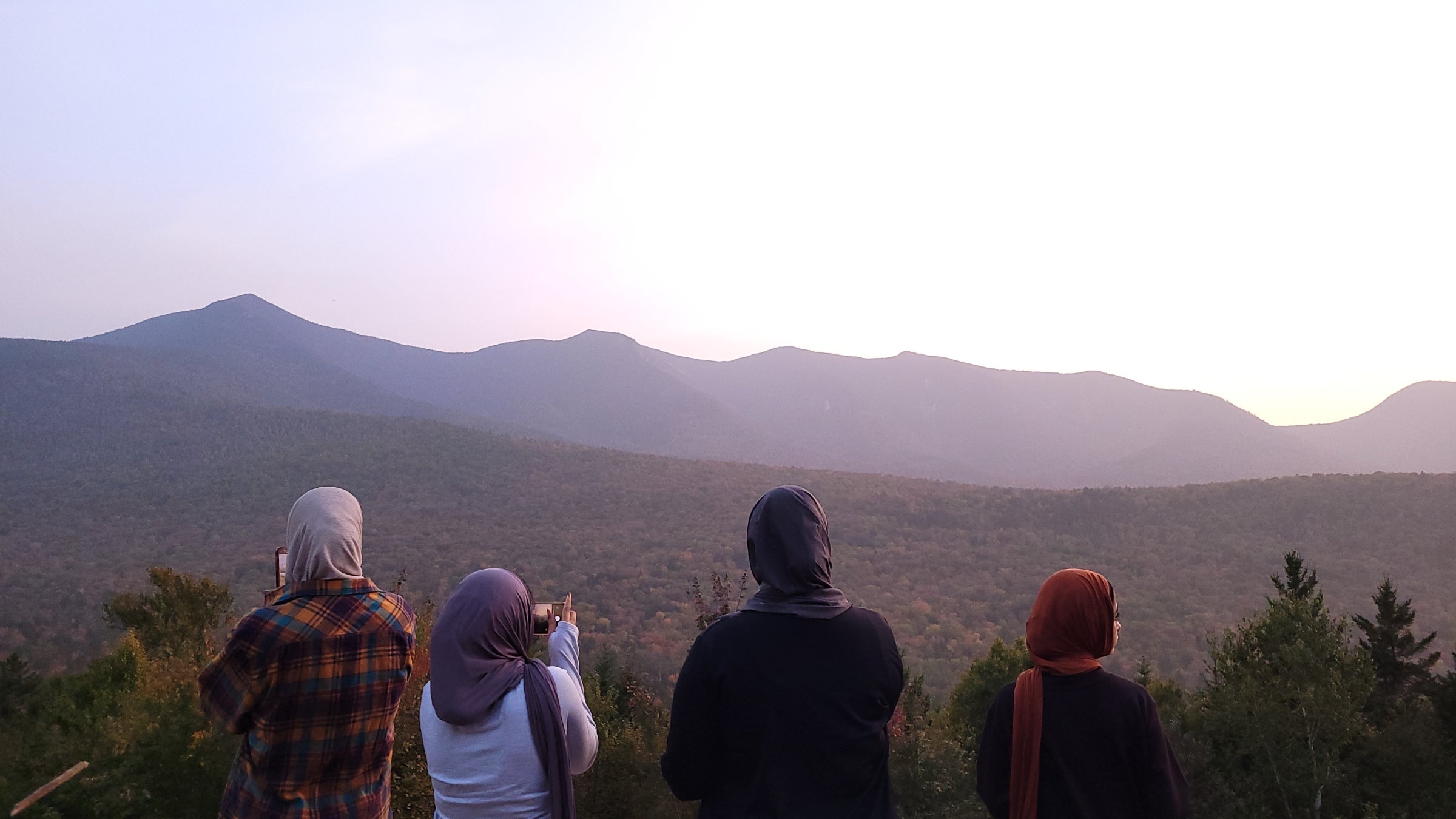
(Photo: Ma'wa Collective)
Something was missing from Nadah Feteih’s life.
The 28-year-old’s resume was filled with accolades that would make any parent proud: A master’s degree in computer science, a well-paying tech job at Facebook, a fellowship at Harvard. Her academic and career achievements ensured a bright path forward, with financial stability most people her age only dream of. Seemingly, she was doing everything right.
But as she considered her future after leaving her Harvard fellowship, she knew there was more out there. Feteih’s days were spent behind a screen, but her heart was out in nature.
“For me, knowing the things that make me happy, my lifestyle, it’s always been the simple things,” Feteih said. “Whether it’s being outside or it’s hiking or being with friends, having that flexibility and freedom.”
ADVERTISEMENT
The pandemic had allowed her to dive into this side of herself: Road trips took her to 27 national parks in two years. She ran two half marathons and a full one in 2022. She got into mountaineering and summited Mt. Kilimanjaro in January 2023.
As she nourished her love for adventure, Feteih began to look around online for other Muslim women like her who were exploring and enjoying time in nature. She found plenty of examples, but they seemed mostly isolated. Feteih had an idea for a Muslim women-only camping trip. After all, she says, “people like us do these things too.” Why not bring them together?
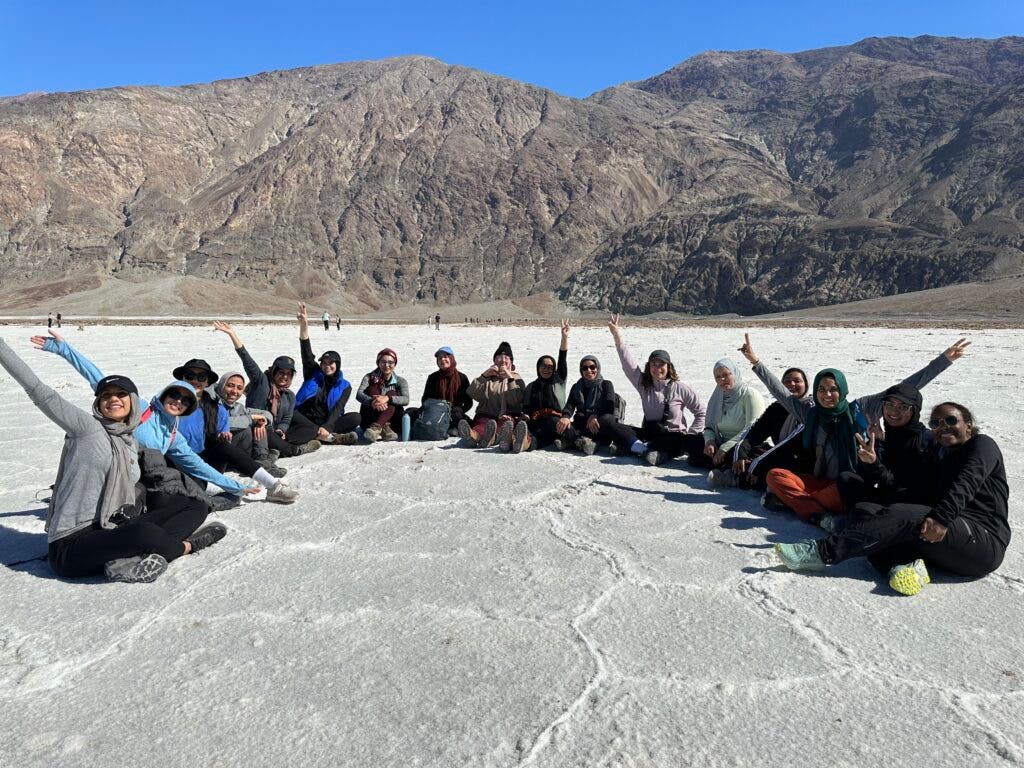
So, in February 2023, she led her first group trip in Death Valley, in collaboration with a Muslim travel group called Dust and Tribe. Twenty Muslim women, joined at one point by a group of wild mules, camped together in the desert for three nights. They hiked across salt flats, prayed next to a waterfall, watched the sunset from a rocky overlook, and enjoyed the comforts of shared company. Over early morning prayers and late evening hikes, Feteih dreamed up a community that would bring even more women together over these experiences. This dream would come to be the Ma’wa Collective.
Ma’wa (مَأْوَى) means “sanctuary” or “place of refuge” in Arabic. That’s what Fatema Choukeir found on her first Ma’wa Collective trip. The 32-year-old had always loved playing outside near her home in New Jersey. Skateboarding as a child turned into snowboarding as an adult, and she regularly took trips into her local woods and mountains, almost always alone.
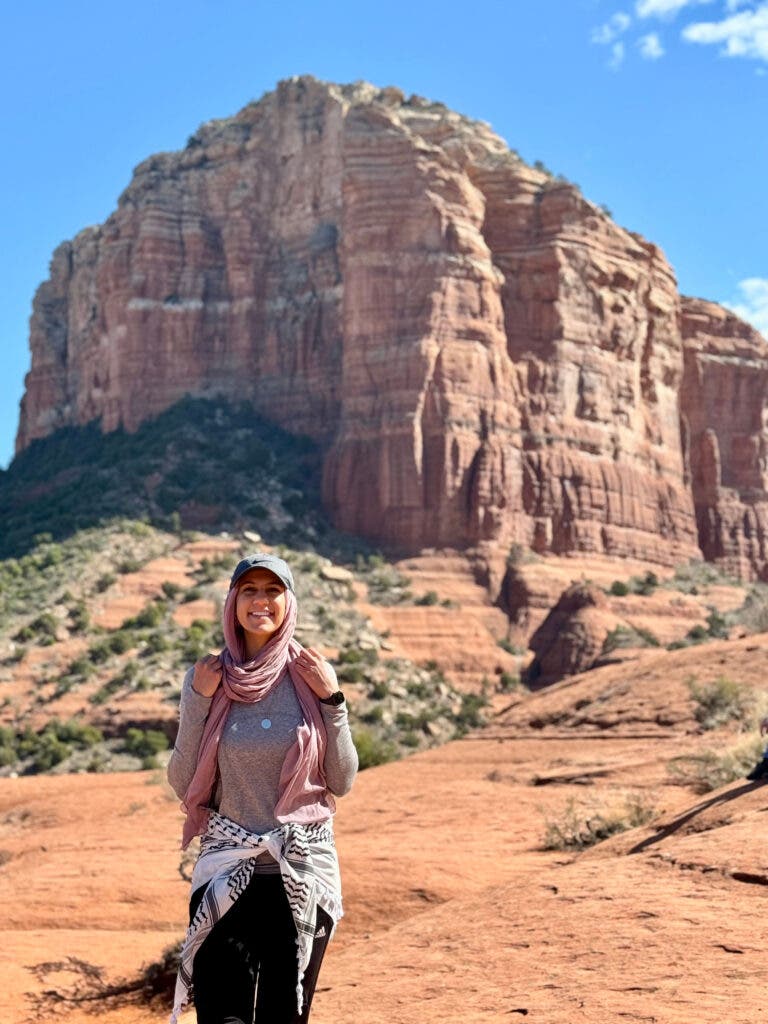
Choukeir first heard about the group when a cousin’s friend sent her their Instagram. When she learned about an upcoming trip to New Hampshire with a group of all Muslim women, Choukeir was intrigued, but skeptical. She knew the group’s makeup would assuage her family’s worries. But still, these were strangers.
ADVERTISEMENT
“I’ve never done that: Gone to a trip where I haven’t known anyone, and I just met them online,” Choukeir said. “I’m just going to be in a house with like 15 Muslim women that I’ve never met before, so I was very skeptical.”
When Choukeir first arrived, she saw that a lot of the women had come in pairs of friends. She felt intimidated, but after an icebreaker that night, Choukeir quickly started making friends of her own. She talked to other women from New Jersey. She met a physicist, an astronomer, an architect, a dentist. She marveled at their independence.
“In my family, specifically, my dad was very sheltering and was like, ‘No, girls can’t do this. You always need a guy with you,’” Choukeir says. “But these girls are all younger than me, and they’re doing these phenomenal things. And I was like, that is so cool. It was very inspiring.”
ADVERTISEMENT
There are plenty of women’s outdoor travel groups in the U.S., and there are a handful of Muslim outdoor travel groups, too. But a group for Muslim women to share outdoor adventures, where no one has to sneak off to pray or tread lightly discussing cultural differences, was an untapped niche.
“After I did the first [trip], I had in the back of my mind the idea of, OK, I’m gonna kind of test this out, see how people respond,” Feteih says. “A lot of these girls that found out about it had always wanted to travel to some of these places, but they just never had people to go with.”
One of those people was Hanaa Abdalla. After a cross-country move to Sacramento, Abdalla’s sister sent her the group’s Instagram, thinking it would be good for her to make friends with Muslim women in and around her new home. Abdalla started scrolling and found a glamping trip in Santa Barbara, a six hour drive. She decided to test it out.
“The group was so welcoming,” Abdalla said. “I was getting so homesick at that point, and with them, I felt so at home.”
ADVERTISEMENT
For two days, the group went on challenging hikes in the nearby mountains. Abdalla says she struggled the first day on a steep uphill, and expected the rest of the group to go on without her. But when she crested the climb, they were waiting.
“They were like, ‘we are here as a group,’” Abdalla said. “We go all the way up together and we come back down together, so we stick it out.”
The second day, Abdalla ended up being the one helping support women behind her on the hike, sharing the encouragement. The trip helped build her confidence in her physical and mental strength, a change that’s encouraged her to start traveling solo. But what really sticks with her from her Ma’wa experience is being able to join together in the morning for the fajr prayer, which is performed before sunrise every day.
“As Muslims, we pray, and that’s how we connect with Allah,” Abdalla said. “It’s so relaxing, so refreshing to just do it out in nature with a group of other girls. That is something that I will hold close to my heart.”
ADVERTISEMENT
In its first year, Ma’wa hosted over 18 trips for dozens of women. Feteih did all she could to handle the rapid growth, training other women to lead trips and trying to let the community expand organically. But with two to three trips per month, sometimes even simultaneous ones on the same weekend, the demands sometimes exceeded Feteih’s capabilities.
“I have a tendency to bite off more than I can chew,” Feteih says. “I think it’s kind of the engineering brain and the problem-solving brain of just wanting to figure out, how can this scale? How can I do things more efficiently? How can I really pinpoint what it is that people love about these experiences, and how can I replicate this in a way where it’s sustainable and we can continue to do more of it?”
Feteih took a leap of faith to grow the community, finishing up her Harvard fellowship and committing to running Ma’wa full-time. Instead of stability and comfort, Feteih has chosen to dive into the unknown, planning trips, expanding the online community, and trying to make sure Ma’wa stays true to its roots while expanding to serve more women.
ADVERTISEMENT
“It is very, very, very, very nerve wracking,” Feteih said. “You never really know what it’s gonna look like on the other side, but knowing that I’m gonna try my best, knowing that there’s enough people out there that really believe in it to help, and having that support from my family and friends, that’s what I’m focusing on now.”
Feteih is committed because she’s seen how Ma’wa can change lives. Ma’wa has taught women like her, Hanaa Abdalla, and Fatema Choukeir that you don’t have to leave any part of yourself out while pursuing what you love.
“It really gave women a pathway to get outside and not be held back by any cultural barriers, or religious barriers,” Choukeir says. “You’re there, and you are who you are, and you’re completely present, and you’re all accepted. And we’re going to do this together.”
